Product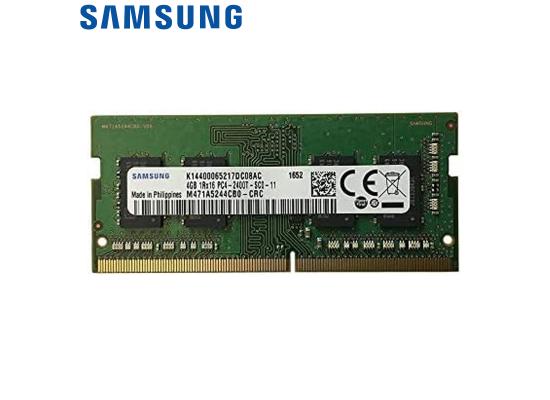
Product gallery · Samsung
Samsung · RAM
SAMSUNG DDR4 U-DIMM 4GB 2666
DDR4 U-DIMM 4GB 2666 · 4GB
Lowest of 2 offers · 2 retailers15 JOD
up to 25 JODOut of stock
Likely the same product — matched on brand and model, not on a manufacturer part number.
One part. Every option.
Prices in JOD| Retailer | Price | Availability | Actions |
|---|---|---|---|
 MID Teks IncLowest | 15 JOD | Out of stock | Visit retailer |
 Oriental Store | 25 JOD | Out of stock | Visit retailer |
These listings match on brand and model rather than on a manufacturer part number, so the match is likely but not confirmed. Check the specifications before you buy on price alone.
Lowest offer added 2021-12-25 · Updated 2026-11-26 · No price change recorded
The finer details
- Model
- DDR4 U-DIMM 4GB 2666
- Brand
- Samsung
- Memory Type
- DDR4from the maker's site
- Module Type
- DIMMfrom the maker's site
- Voltage
- 1.2 Vfrom the maker's site
- Memory Capacity
- 4GB
- RAM Speed
- 2666 MHz
- RGB
- RGB
| Memory Specifications | |
|---|---|
| Device | PC |
| Memory Type | DDR4 |
| Speed | 2666MHz |
| Capacity | 4 GB |
| After Sales Support | |
| Warranty | 1 Year |
From Samsung
View on Samsung's site- # Powering reliable computing everywhere Powering reliable computing everywhere Powering reliable computing everywhere
Stable, scalable memory for diverse computing systems Stable, scalable memory for diverse computing systems Stable, scalable memory for diverse computing systems
Samsung DDR delivers the performance, capacity, and reliability needed to power diverse computing environments.
From the demanding thermal and durability requirements of industrial systems to the rigorous performance requirements of enterprise infrastructures, our solutions are engineered to meet strict industry standards. The DDR family enables smooth data processing, dependable operation, and scalable configurations that maintain stable performance as workloads rapidly grow.
Samsung DDR delivers the performance, capacity, and reliability needed to power diverse computing environments.From the demanding thermal and durability requirements of industrial systems to the rigorous performance requirements of enterprise infrastructures, our solutions are engineered to meet strict industry standards. The DDR family enables smooth data processing, dependable operation, and scalable configurations that maintain stable performance as workloads rapidly grow.
DDR5 DDR5 DDR5
up to 32 Gb, ensuring improved signal integrity and stable operation with on-die ECC.
With TSV-based stacking and a dual 32-bit sub-channel architecture, it is optimized for data-intensive cloud services, high-throughput computing, and large-scale enterprise workloads.
RDIMM
Samsung RDIMM uses a register to buffer command and control signals, improving signal integrity and system stability for server platforms. With ECC support and x4/x8 organizations across single- and multi-rank options, RDIMM provides dependable performance for enterprise workloads.
MRDIMM
Samsung MRDIMM is designed to increase bandwidth for memory-intensive workloads in AI inferencing and HPC. By combining multiple data signals into a single channel, MRDIMM lowers latency and boosts performance efficiency.
UDIMM
Samsung UDIMM operates without a register or buffer, allowing direct communication with the memory controller for lower latency and a simpler signal path. Supporting x8/x16 organizations in single- or dual-rank configurations, UDIMM is suited for desktops and workstations that benefit from low-latency, unbuffered operation.
ECC UDIMM
Samsung ECC UDIMM preserves the unbuffered, low-latency behavior of UDIMM while adding error-correcting capability to enhance data integrity. It is well suited for workstations and entry-level servers that require reliable operation without the complexity of registered designs.
SODIMM
Samsung SODIMM offers a compact, small-outline form factor designed for laptops, mini-PCs, and embedded systems where board space is limited. With efficient signaling and flexible single- or dual-rank configurations, SODIMM provides stable memory performance in space-constrained designs.
ECC SODIMM
Samsung ECC SODIMM adds error-correcting capability to the compact SODIMM form factor, improving data reliability in systems where stability and space efficiency are essential. It is well suited for industrial, embedded, and edge platforms that require dependable operation in constrained environments.
DDR4 DDR4 DDR4
Samsung DDR4 delivers data rates up to 3,200 Mbps and supports densities up to 32 Gb, providing stable and energy-efficient operation at 1.2 V. Its bank-group architecture enhances throughput and scalability, making it a proven solution for mainstream computing environments.
A “clock” in digital systems is like a repeating beat that tells the memory when to send or receive data.
Each beat has an “up” movement (rising edge) and a “down” movement (falling edge).
This means DDR can transfer data twice per cycle without increasing the clock speed itself.
Inside DDR memory, data is stored in DRAM cells made of one transistor and one capacitor,
and the memory controller coordinates read and write operations in sync with the clock.
Because it uses both edges of the clock, DDR provides much higher bandwidth for modern systems.
DDR stands for Double Data Rate. It is a type of DRAM that sends data twice during one clock cycle.
A “clock” in digital systems is like a repeating beat that tells the memory when to send or receive data. Each beat has an “up” movement (rising edge) and a “down” movement (falling edge).
Older memory sent data only on one of these edges, but DDR sends data on both. This means DDR can transfer data twice per cycle without increasing the clock speed itself.
Inside DDR memory, data is stored in DRAM cells made of one transistor and one capacitor, and the memory controller coordinates read and write operations in sync with the clock. Because it uses both edges of the clock, DDR provides much higher bandwidth for modern systems.
Can I mix different DDR generations (e.g., DDR4 + DDR5) or different memory speeds?
Different DDR generations, such as DDR4 and DDR5, cannot be mixed because they use different slot designs,
signaling methods, and electrical characteristics, making them incompatible with each other.
For memory modules within the same DDR generation but with different speeds, they can be mixed,
but all modules will operate at the speed of the slowest one. This is because the memory controller must choose
If it attempted to run at a higher speed than one module can handle, the system would become unstable or fail to boot.
they can be mixed, but all modules will operate at the speed of the slowest one.
Different DDR generations, such as DDR4 and DDR5, cannot be mixed because they use different slot designs, signaling methods, and electrical characteristics, making them incompatible with each other.
For memory modules within the same DDR generation but with different speeds, they can be mixed, but all modules will operate at the speed of the slowest one. This is because the memory controller must choose a common timing and frequency that every module can reliably support.
A DRAM module is a memory component that integrates multiple DRAM chips onto a small circuit board
and serves as the main memory in computers and electronic devices. These modules are manufactured
in standardized formats so they can be easily installed and recognized by different systems.
Common examples include UDIMM for desktop PCs, SO-DIMM for laptops and compact systems,
The DRAM module temporarily stores the data required by processors such as the CPU or GPU,
enabling smooth program execution, efficient multitasking, and stable data processing.
A DRAM module is a memory component that integrates multiple DRAM chips onto a small circuit board and serves as the main memory in computers and electronic devices.These modules are manufactured in standardized formats so they can be easily installed and recognized by different systems. Common examples include UDIMM for desktop PCs, SO-DIMM for laptops and compact systems, and RDIMM or LRDIMM for servers and data-center platforms.
The DRAM module temporarily stores the data required by processors such as the CPU or GPU, enabling smooth program execution, efficient multitasking, and stable data processing. In essence, it is an essential component that directly influences the overall performance and responsiveness of modern computing systems.
A DRAM chip is an individual semiconductor device that stores data temporarily using an array of memory cells.
A single DRAM chip cannot be used directly as system memory, so multiple chips are assembled onto a circuit board
while a DRAM module is the completed memory product made by combining these chips
A DRAM chip is an individual semiconductor device that stores data temporarily using an array of memory cells. A single DRAM chip cannot be used directly as system memory, so multiple chips are assembled onto a circuit board to create a form that can be installed in a computer or server.
In other words, a DRAM chip is the fundamental building block of memory, while a DRAM module is the completed memory product made by combining these chips into a structure that computing systems can actually use.
This improves signal stability and allows systems to use higher memory capacities,
LRDIMM (Load-Reduced DIMM) uses additional buffering to further reduce the electrical load on the memory controller.
This enables servers to support very large memory capacities and improves scalability for memory-intensive workloads.
SODIMM (Small Outline DIMM) is a compact form factor used in laptops, mini PCs, and small-form-factor systems.
It functions similarly to UDIMM but is physically smaller to fit in space-constrained devices.
UDIMM, RDIMM, LRDIMM, and SODIMM are different types of DRAM modules designed for specific system environments.
UDIMM (Unbuffered DIMM) is commonly used in desktop PCs and some workstations. It has no register or buffer, which results in lower latency, but it supports smaller memory capacities compared to server-grade modules.
RDIMM (Registered DIMM) includes a register that buffers commands and addresses between the memory controller and the DRAM chips. This improves signal stability and allows systems to use higher memory capacities, making it suitable for enterprise servers and data-center platforms.
LRDIMM (Load-Reduced DIMM) uses additional buffering to further reduce the electrical load on the memory controller. This enables servers to support very large memory capacities and improves scalability for memory-intensive workloads.
SODIMM (Small Outline DIMM) is a compact form factor used in laptops, mini PCs, and small-form-factor systems. It functions similarly to UDIMM but is physically smaller to fit in space-constrained devices.
the system may run in a reduced or asymmetric memory mode, which can affect performance.
but differences in timing, voltage, or internal design can occasionally cause compatibility problems.
it is recommended to use DRAM modules that match in speed, capacity, and manufacturer whenever possible.
Mixing different DRAM modules is generally possible, but it may lead to limitations or instability depending on the system.
When modules with different speeds are installed together, the entire memory will operate at the speed of the slowest module.
If the capacities differ, the system may run in a reduced or asymmetric memory mode, which can affect performance.
Using different brands is usually not an issue, but differences in timing, voltage, or internal design can occasionally cause compatibility problems.
For the most stable operation, it is recommended to use DRAM modules that match in speed, capacity, and manufacturer whenever possible.
ECC (Error-Correcting Code) memory is a type of DRAM module that can detect and correct single-bit errors during data processing.
These errors can occur naturally from electrical interference, cosmic rays, or signal noise, and although small,
ECC memory is mainly used in servers, workstations, and mission-critical systems where data accuracy, uptime,
and reliability are essential. Most consumer desktops and laptops do not require ECC memory, and many do not support it.
However, if you operate workloads involving scientific computing, financial systems, medical applications, AI training,
or enterprise-grade servers, ECC memory may be necessary to ensure system stability and data integrity.
ECC (Error-Correcting Code) memory is a type of DRAM module that can detect and correct single-bit errors
during data processing. These errors can occur naturally from electrical interference, cosmic rays, or signal noise,
ECC memory is mainly used in servers, workstations, and mission-critical systems
Most consumer desktops and laptops do not require ECC memory, and many do not support it.
However, if you operate workloads involving scientific computing, financial systems, medical applications,
AI training, or enterprise-grade servers, ECC memory may be necessary to ensure system stability and data integrity.
ECC (Error-Correcting Code) memory is a type of DRAM module that can detect and correct single-bit errors during data processing. These errors can occur naturally from electrical interference, cosmic rays, or signal noise, and although small, they can lead to data corruption or system instability.
ECC memory is mainly used in servers, workstations, and mission-critical systems where data accuracy, uptime, and reliability are essential. Most consumer desktops and laptops do not require ECC memory, and many do not support it.
However, if you operate workloads involving scientific computing, financial systems, medical applications, AI training, or enterprise-grade servers, ECC memory may be necessary to ensure system stability and data integrity.
RDIMM (Registered DIMM) is a type of server memory module that includes a register
This register buffers or “stabilizes” the command and address signals before they reach the DRAM chips,
reducing electrical load on the memory controller. Because of this architecture, RDIMMs provide greater reliability and
support higher memory capacities compared to unbuffered modules, making them widely used in enterprise servers and
data-center systems. RDIMMs are designed specifically for server environments and are
This register buffers or “stabilizes” the command and address signals before they reach
the DRAM chips, reducing electrical load on the memory controller. Because of this
architecture, RDIMMs provide greater reliability and support higher memory capacities
compared to unbuffered modules, making them widely used in enterprise servers and
RDIMM (Registered DIMM) is a type of server memory module that includes a register between the memorycontroller and the DRAM chips.
This register buffers or “stabilizes” the command and address signals before they reach the DRAM chips, reducing electrical load on the memory controller. Because of this architecture, RDIMMs provide greater reliability and support higher memory capacities compared to unbuffered modules, making them widely used in enterprise servers and data-center systems. RDIMMs are designed specifically for server environments and are not compatible with standard desktop or laptop systems.
All RDIMMs designed for server use already include ECC (Error-Correcting Code) functionality by default.
The term RDIMM generally refers to server-grade registered modules that inherently support ECC,
When the term ECC RDIMM is used, it is simply emphasizing that the RDIMM includes ECC error-correcting capabilities.
Functionally, there is no difference—an RDIMM for servers is an ECC-enabled registered module by definition.
In short, RDIMM and ECC RDIMM operate the same way, and the naming difference only reflects
that inherently support ECC, even when “ECC” is not explicitly stated in the name.
it is simply emphasizing that the RDIMM includes ECC error-correcting capabilities.
All RDIMMs designed for server use already include ECC (Error-Correcting Code) functionality by default. The term RDIMM generally refers to server-grade registered modules that inherently support ECC, even when “ECC” is not explicitly stated in the name.
When the term ECC RDIMM is used, it is simply emphasizing that the RDIMM includes ECC error-correcting capabilities. Functionally, there is no difference—an RDIMM for servers is an ECC-enabled registered module by definition.
In short, RDIMM and ECC RDIMM operate the same way, and the naming difference only reflects whether the ECC feature is explicitly highlighted.
In fact, RDIMMs usually have slightly higher latency because they use a register to buffer command and address signals.
This additional buffering improves signal stability but adds a small amount of delay.
RDIMMs are designed for servers that require higher memory capacity, stability, and scalability.
In large memory configurations, RDIMMs can maintain stable performance where UDIMMs may become limited.
UDIMMs may offer lower latency, while RDIMMs provide better stability and support for larger memory capacities,
DIMMs are not inherently faster than UDIMMs. In fact, RDIMMs usually have slightly higher latency because they use a register to buffer command and address signals. This additional buffering improves signal stability but adds a small amount of delay.
However, the purpose of RDIMM is not raw speed. RDIMMs are designed for servers that require higher memory capacity, stability, and scalability. In large memory configurations, RDIMMs can maintain stable performance where UDIMMs may become limited.
UDIMMs may offer lower latency, while RDIMMs provide better stability and support for larger memory capacities, especially in enterprise server environments.
Most desktop systems are designed to support only UDIMMs, while servers specify whether they support
RDIMMs or UDIMMs exclusively. Because RDIMMs use a register for buffering commands and addresses,
As a result, installing an RDIMM in a system that requires UDIMMs will prevent the system from booting,
and the same is true in reverse. To ensure proper operation, you must use the memory module type
Most desktop systems are designed to support only UDIMMs, while servers specify whether they support RDIMMs or UDIMMs exclusively. Because RDIMMs use a register for buffering commands and addresses, their electrical characteristics and signaling differ from those of UDIMMs.
As a result, installing an RDIMM in a system that requires UDIMMs will prevent the system from booting, and the same is true in reverse. To ensure proper operation, you must use the memory module type explicitly supported by your motherboard or server platform.
LRDIMM (Load-Reduced DIMM) is a type of server memory designed to support larger capacities
and improve signal stability by reducing the electrical load on the memory controller.
It uses a memory buffer to isolate DRAM chips from the memory controller, which allows
the system to install more high-density modules and maintain stable operation even under heavy memory workloads.
Because of this structure, LRDIMMs are commonly used in enterprise servers and data-center systems
that require very large memory footprints, such as virtualization platforms, large-scale databases,
In summary, LRDIMM enables higher memory scalability and is well-suited for workloads that demand
LRDIMM (Load-Reduced DIMM) is a type of server memory designed to support larger
capacities and improve signal stability by reducing the electrical load on the memory controller.
It uses a memory buffer to isolate DRAM chips from the memory controller, which allows the
system to install more high-density modules and maintain stable operation even under heavy
memory workloads. Because of this structure, LRDIMMs are commonly used in enterprise
servers and data-center systems that require very large memory footprints, such as
virtualization platforms, large-scale databases, in-memory analytics, and high-performance
In summary, LRDIMM enables higher memory scalability and is well-suited for workloads that
LRDIMM (Load-Reduced DIMM) is a type of server memory designed to support larger capacities and improve signal stability by reducing the electrical load on the memory controller.
It uses a memory buffer to isolate DRAM chips from the memory controller, which allows the system to install more high-density modules and maintain stable operation even under heavy memory workloads. Because of this structure, LRDIMMs are commonly used in enterprise servers and data-center systems that require very large memory footprints, such as virtualization platforms, large-scale databases, in-memory analytics, and high-performance computing environments.
In summary, LRDIMM enables higher memory scalability and is well-suited for workloads that demand large, reliable memory capacity.
RDIMMs and LRDIMMs are designed for different server environments, so one is not universally better than the other.
RDIMMs (Registered DIMMs) use a register to stabilize command and address signals,
offering good performance and reliability for general server workloads. They are widely
used across enterprise servers because they provide an effective balance between capacity, cost, and stability.
LRDIMMs (Load-Reduced DIMMs) include additional buffering that reduces the electrical load on the memory controller.
Explore more about DDR
A steady price
1 recordBased on the price records this catalogue holds — not a guarantee of an all-time high or low.
Lowest price across 2 retailers.
The lowest price has not changed since it was first recorded on 2026-11-26, currently 15 JOD.
| Recorded | Price | Change | Lowest at |
|---|---|---|---|
| 2026-11-26 | 15 JOD | First recorded | MID Teks Inc |
Keep your options open.
Explore ram
ADATA · RAM
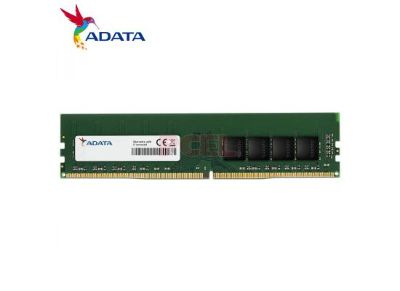
ADATA DDR4 U-DIMM 4GB 2666 (19)DDR4 U-DIMM 2666 · 4GB
from 20 JODOut of stock
Compared across 2 retailers
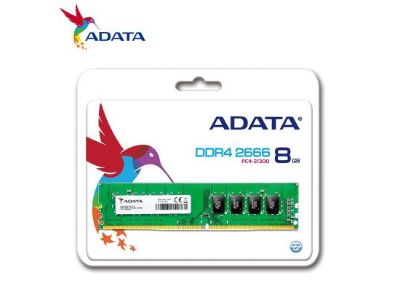
ADATA · RAM
ADATA 8GB DDR-4 2666MHz MemoryDDR4 2666 U-DIMM · 8GB
81 JODOut of stock
Compared across 2 retailers